
Introduction#
TRUST is a High Performance Computing (HPC) thermal-hydraulic engine for Computational Fluid Dynamics (CFD) developed at the Departement of System and Structure Modelisation (DM2S) of the French Atomic Energy Commission (CEA).
The acronym TRUST stands for TRio_U Software for Thermalhydraulics. This software was originally designed for conduction, incompressible single-phase, and Low Mach Number (LMN) flows with a robust Weakly-Compressible (WC) multi-species solver. However, a huge effort has been conducted recently, and now TRUST is able to simulate real compressible multi-phase flows.
TRUST is also being progressively ported to support GPU acceleration (NVidia/AMD), using the Kokkos library.
The software is OpenSource with a BSD license, available on GitHub via this link.
You can easily create new project based on TRUST plateform. Theses projects are named BALTIK projects (Build an Application Linked to TRUST Kernel).
A bit of history: the Modular Software Named Trio_U#
TRUST was born from the cutting in two pieces of Trio_U software. Trio_U was a software brick based on the Kernel brick (which contains the equations, space discretizations, numerical schemes, parallelism…) and used by other CEA applications (see Figure 1).
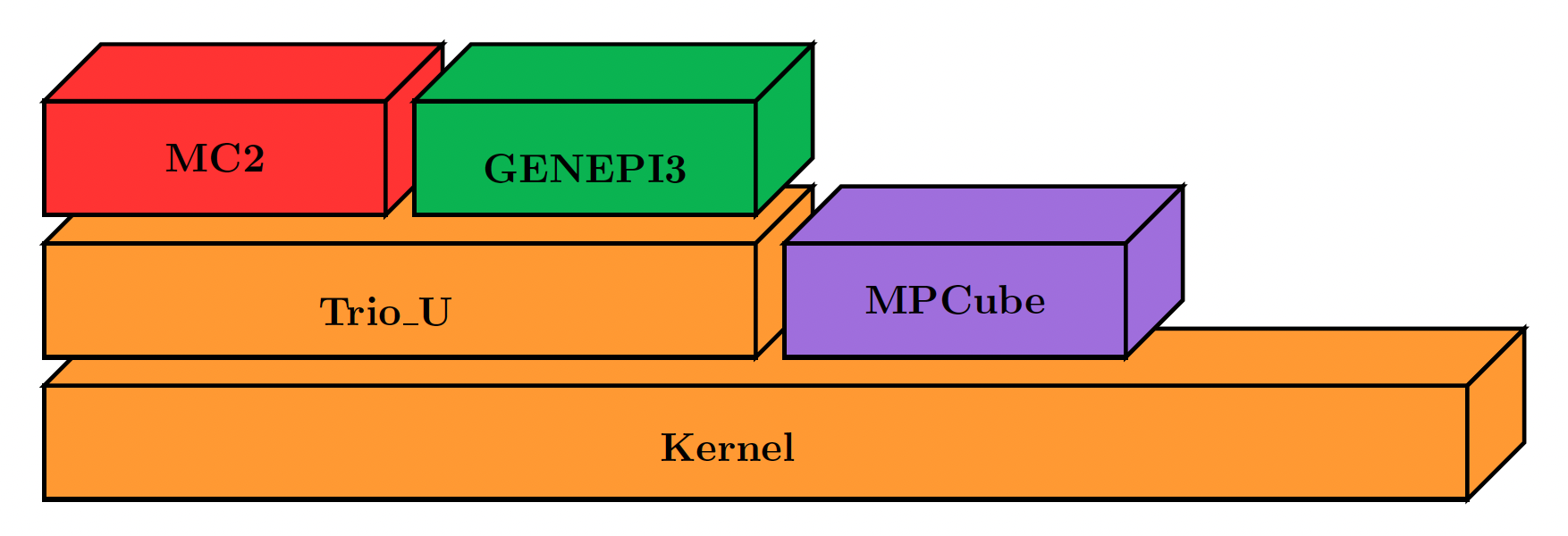
Figure 3 Figure 1: Trio_U brick software#
In 2015, Trio_U was divided in two parts: TRUST and TrioCFD.
TRUST is a new platform, its name means: TRio_U Software for Thermohydraulics.
TrioCFD is an open source BALTIK project based on TRUST.
Here are some other selected BALTIKS based on the TRUST platform (see Figure 2).
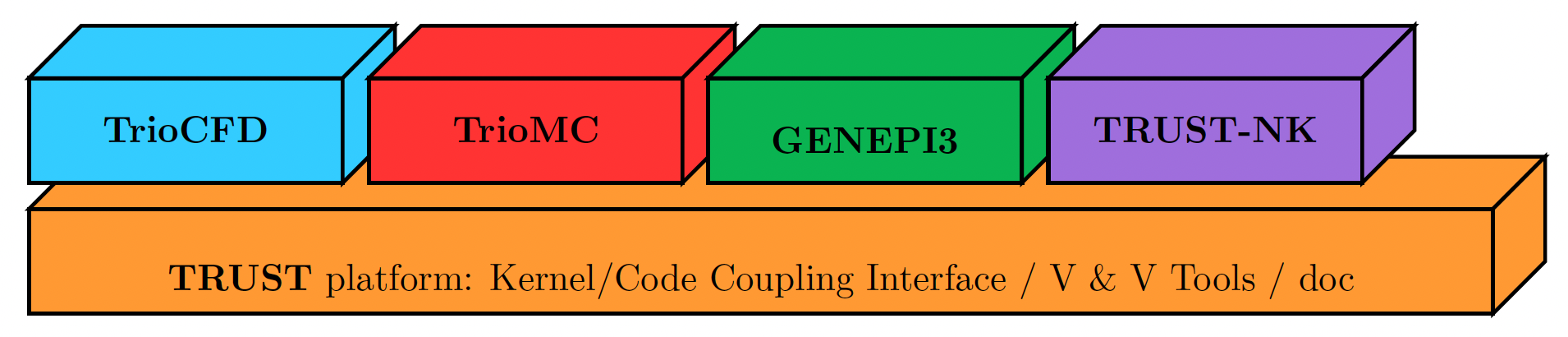
Figure 4 Figure 2: Selected BALTIKS based on the TRUST platform.#
Short History#
TRUST is developed at the Laboratory of High Performance Computing and Numerical Analysis (LCAN) of the Software Engineering and Simulation Service (SGLS) in the Department of System and Structure Modeling (DM2S).
The project starts in 1994 and improved versions were built ever since:
1994 : Start of the project Trio_U
1997 : v1.0 - Finite Difference Volume (VDF) method only
1998 : v1.1 - Finite Element Volume (VEF) method only
2000 : v1.2 - Parallel MPI version
2001 : v1.3 - Radiation model (TrioCFD now)
2002 : v1.4 - LES turbulence models (TrioCFD now)
2006 : v1.5 - VDF/VEF Front Tracking method (TrioCFD now)
2009 : v1.6 - Data structure revamped
2015 : v1.7 - Separation TRUST & TrioCFD + switch to open source
2019 : v1.8 - New polyheadral discretization (PolyMAC) + Multiphase problem + Weakly Compressible model
2022 : v1.9.0 - Modern C++ code (templates, CRTP, …) + remove MACROS + support GPU (NVidia/AMD)
2025 : v1.9.6 - Unified version to handle 32-64b integers + VEF discretisation supported on GPU